Operational Model Transformation
Transform your operations for agility, clarity, and growth

Organizations dream of an operating model where work flows seamlessly, responsibilities are clear, and teams collaborate efficiently across departments. They envision decisions being made quickly, without confusion, and resources being fully optimized to deliver value. However, in reality, many companies struggle with outdated structures, ambiguous roles, redundant processes, and slow decision-making. Teams often work hard but in silos, leading to inefficiency, frustration, and missed opportunities.

Operational Model Transformation helps organizations redefine how they operate to achieve that vision. KiBozzle begins by analysing current workflows, interdependencies, and responsibilities, identifying bottlenecks, overlaps, and gaps. Through redesign, organizations can remove redundancies, clarify roles, and embed accountability into every function. The model becomes scalable, agile, and aligned with strategy, so that both leaders and employees can make informed, fast decisions.

This transformation turns operational chaos into coordinated performance, allowing companies to achieve efficiency, agility, and resilience simultaneously.

Operational Transformation Image
The Big Picture

The Playbook for Action

Inefficient operating models slow decision-making, increase costs, and reduce agility. Redesigning the operating model provides clarity, accountability, and real-time visibility, enabling sustainable operational performance and responsiveness.
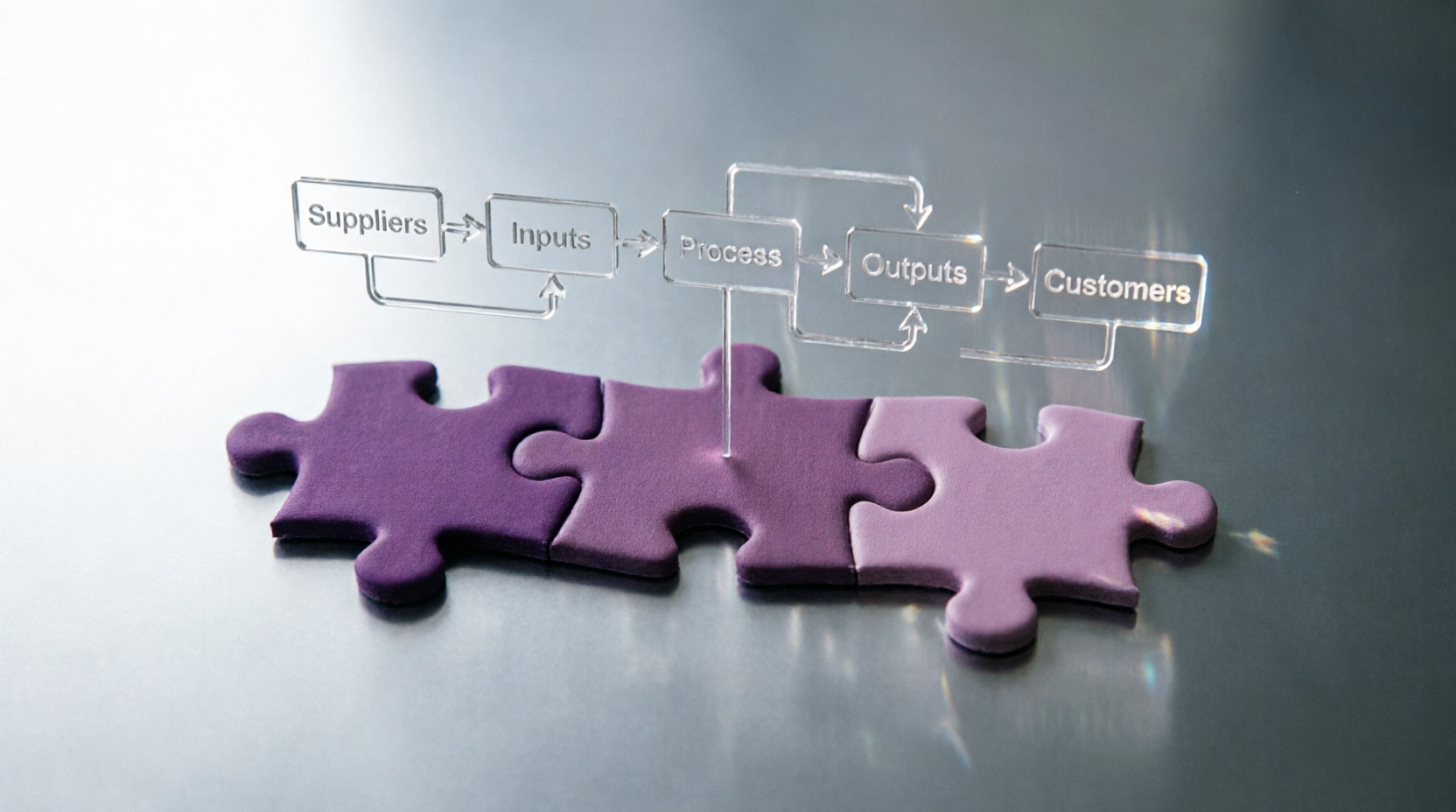
SIPOC Diagrams

SIPOC diagrams

Map Suppliers, Inputs, Processes, Outputs, and Customers to provide a high-level overview of each process. They identify inefficiencies, unclear handoffs, and redundant activities to target areas with the highest operational impact.

RACI Matrices

RACI matrices

Clarify roles and responsibilities by defining who is Responsible, Accountable, Consulted, and Informed for each task. This reduces ambiguity, accelerates decision-making, and increases accountability.

Lean Value Stream Mapping

Lean value stream mapping

Captures the end-to-end flow of materials, information, and activities and identifies non-value-added steps and opportunities for automation.

Lean Principles & Six Sigma

Lean principles and Six Sigma techniques

Focus on eliminating waste, improving process efficiency, and reducing variation to enhance quality and repeatability.

Automation Assessment Tools

Automation assessment tools

Including UiPath and Power Automate, identify repetitive, rule-based tasks that can be automated to reduce manual effort, accelerate throughput, and increase accuracy.

Performance Dashboards

Performance dashboards

Such as Power BI and Tableau, provide real-time insights into operational KPIs, including cycle time, resource utilization, throughput, and error rates, enabling proactive management and continuous improvement.

Change Impact Assessments

Change impact assessments and scenario modelling

Ensure redesigned processes align with strategic objectives and do not create bottlenecks or unintended disruptions elsewhere in the organization.